Showing posts with label Corrugated. Show all posts

Friday, April 3, 2020

Retail Product Packaging Trends during COVID-19

Customers are more likely to choose your goods over that of your rivals if your retail product packaging is appealing. With so many alternatives, businesses must depend on packaging and display signals to appeal, inform, and connect people to their brand in shops and online.

Even though 64 percent of customers say they will purchase goods off the shelf without exploring them if the packaging appeals to them and 55 percent of customers said that they will come back to a website if their package arrived in customized packaging, your packaging is a valuable element for attracting new and existing shoppers.

You're probably missing out on prospective consumers if you're not putting your finances to good use to develop creative, eye-catching, and functionally strong displays and packaging. As a result, investing in customized retail product packaging is a good investment in your future sales.
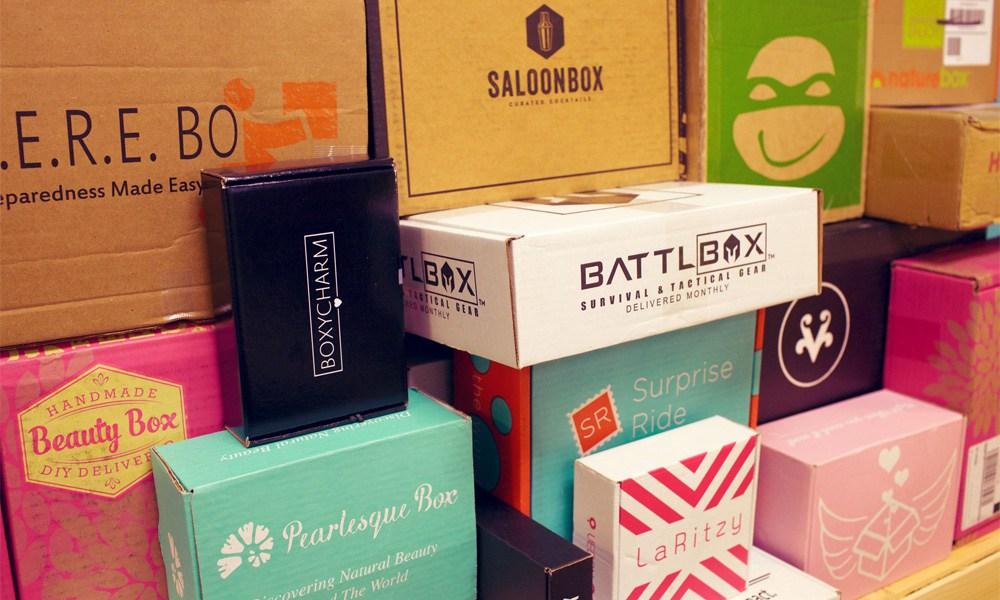
Customized retail packaging solutions are a one-of-a-kind extension of your business. Various techniques such as direct flexo printing, top sheet lamination and tag mounting, digital printing, die cutting, and specialized cutting enable for specially made displays in nearly any size, structure, color, or configuration you can assume, with exact color matching to your product and tag colors. These procedures distinguish your packaging and presentations, putting your goods in the forefront on both digital and physical stores.

What Impact Has COVID-19 Had on Retail Product Packaging?

As internet shopping habits grew during COVID-19 and are expected to grow after the outbreak, retail product packaging is becoming more important to handle greater shipment numbers and ensure that product packaging attracts customers while also keeping goods secure. Some businesses have attempted to deal with increased competition by focusing their marketing strategies on their packaging. However, the outbreak impacted some long-standing supply chains, and businesses may still be experiencing delays as a result of these disruptions.

In response to the emergence of COVID-19, a greater proportion of customers expressed worry about biosafety in connection to packaging (especially for foodservice goods), a trend that might continue going ahead as people stay more health-conscious even after the pandemic has gone.


Trends in Retail Packaging

Businesses are altering their retail packaging strategies to represent the ideals of sincerity, development, simplicity, and nature in response to the pandemic and other contemporary problems like sustainability, and will likely continue to do so. Here are a number of the retail product packaging trends that are emerged in 2021:

Soothing Shades and Balanced Tones

Sharp and strong packaging design ideas are slowly loosing appeal, owing to the present vogue of minimalism. Color trends are moving further away from brightly contrasting shades and toward more naturalistic or neutral tones at the moment. In 2021, expect to see more modest coloring and gentle earth tones; however colors will always vary based on the product kind and company.

Elements with Transparency

In 2021, transparent components like plastic product-viewing glass sections are increasingly likely to be included in retail packaging to express essential principles like sincerity and responsibility. 

Customers generally are interested about the accuracy of information and are likely to be suspicious of any misrepresentation of a good by its packaging. Attractive materials, as well as well-explained, convenient product information and phrasing shown on packaging and displays, can help to mitigate this.

Illustrations that are flat

Flat illustrations are anticipated to stay popular in 2021, following the minimalism and simple trends. The two-dimensional images are not only popular in the design industry at the moment, but they are also efficient and cost-effective when it refers to producing package labels. Flat illustrations are also easily adaptable to your brand's brand identity, making this trend applicable to a wide range of product kinds and sectors.

Packaging that is good for the environment

Businesses will have to maintain to adapt their packaging and procedures to be less wasteful and more ecologically safe as customers grow increasingly concerned about the impacts of packaging on the environment. Corrugated is among the most recyclable and reusable materials on the market, making it appealing to businesses looking to be more environmentally responsible.

Tech-Integration

It's no shock that in today's technology-driven world, packaging trends are turning toward embracing technological advances to improve customer experiences. Businesses are more likely to give easy-to-access links to resources such as a website login or structured and organized explanations, especially with tech-related items. Interactive features such as visible QR codes linked to information or practical aspects for product monitoring are anticipated to become more visible on retail goods packaging and displays.

Wednesday, September 12, 2018

Why Is Corrugated Packaging The Right Choice?

 We'll explain what corrugated is, how it's manufactured, and why it's the ideal packaging solution for you and your goods even if you're not aware of it. Corrugated and cardboard are sometimes mistaken by those who are not in the packaging sector. Although they appear to fulfill the same functions and have similar appearances, the two materials are structurally and functionally completely different.

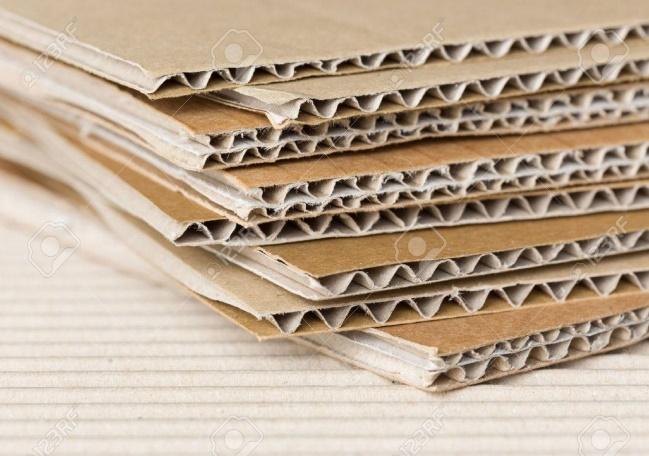
A cardboard box is constructed of strong paper pulp or thick paper material. A cereal box is an excellent example of a cardboard box, but corrugated cartons are harder and have many layers of material instead of a one layer. An interior liner, an outer liner, and a fluted medium between them make up the three layers.

Corrugated as a Packaging Choice Has a Lot of Advantages

1. Reusability, Recycling, and Durability 

Corrugated is the most recycled packaging material on the globe, as it is produced primarily of trees (a renewable). It is made from trees and old recycled corrugated cartons in a sustainable manner, with an industry recovery rate of about 90% over the previous 8 years and 96 percent in 2018. That's why the usual corrugated box contains 50% recyclable materials.

Plastic, another common packaging material, is just around 15% recoverable, contrary to corrugate’s general recovery rate with over 78 percent.

Improved efficiency in mill power systems, improved recovery for recycling, and use of low-impact fossil fuels were all verified in the most recent corrugated industry life cycle assessment (LCA) issued in 2017. Corrugated packaging recovery also decreased greenhouse gas emissions by 35% from 2006 to 2014 by retaining corrugated out of landfills, according to the LCA.

Corrugated material recycling has an immediate and substantial influence on our planet's wellbeing. It reduces the amount of solid trash that is disposed of. Without needing to utilize all-new raw materials, recovered fiber is used to produce fresh corrugated packaging. As old corrugated boxes are a significant resource for both paper mills and fresh corrugated producers, they may also be a source of income.

Corrugated may be recycled in order to be a renewable material. Because of its resilience and versatility, it may be reused several times before being reused to create fresh packaging. Consumer products are frequently shipped in corrugated boxes. Your goods will most likely arrive in a corrugated box if you purchase anything online. Thus, the next time you get an order, grab the carton, put it aside, and save it for later use.


2. Safety of the Goods

The safety of your products should be the most essential aspect of your packaging. If your consumer gets your goods and it is defective or destroyed, then nothing works. A custom corrugated container can assure that your goods arrive securely at its destination. Other packaging materials, like foam, can be used into corrugated packaging to guarantee the safety of your goods.

3. Modification

There aren't too many packaging alternatives that let you personalize your package to fit your product perfectly. You may do so using corrugated materials. You may modify your packaging to match the appearance and feel of your goods. One-size-fits-all packaging is no longer an option. Use corrugated packaging to effectively display your goods to your target consumer base, whether it's for shop or e-commerce.

4.  Skills in Printing and Graphic Design

Corrugated packaging allows companies to include artwork, and what better option to grab the attention of the customers than with customized designs? Consumers are drawn to your goods and away from your competitors because of graphics. They also provide you the opportunity to raise brand recognition. Litho labeling, digital print, direct print, and integrated graphics are four popular graphic alternatives to consider.


5. Commercial Packaging and E-commerce

Do you require e-commerce packaging or retail packaging? If that's the case, corrugated is the solution for you.

For commercial enterprises, catching a customer's sight is a difficult task, but it's also critical. Your product packaging must stand out in only a few minutes to create an impression on a customer. You can achieve precisely that with a custom corrugated box since it may be specifically made for your goods, it protects your product for retail display, and it increases consumer perceptions of its worth.

Custom corrugated packaging for e-commerce allows us to make a good first decision with your consumers immediately. You can assure that your consumer is satisfied as soon as they see your branding with a custom corrugated packaging. According to research, the appearance of product packaging has a high connection with a customer's perception of the product's worth.

Thursday, June 23, 2016

Crowd Controlled Packaging for Managing High Returns

Returns surges happen with companies. holiday season, where people get items that either don’t fit right or not what they wanted, oftentimes get returned.

Another example is fast fashion, where trends go out of style fast, that people only keep it until it becomes unpopular to wear. 

Then there are those try-before-you-buy models, popularized by Amazon Fashion, where you can try the item before committing to a purchase, and can be turned if the sizing is incorrect. 

Having the right packaging that can handle high returns is important. If not factored, it can lead to you wasting a lot of money, which isn’t fun.

Here, we will go over the most popular crowd-controlled packaging for managing returns of all kinds. 


Packaging that Streamlines and Improves Reverse Logistics 

With reverse logistics, returns are the main focus, because in some cases, it might mean a sale, or a rental.

You need to make sure that reverse logistics are maintained and factored in. here is something to consider when putting together reverse logistics packaging.

Easy reseal envelopes are a good starting point with these reseal envelopes, you’re able to seal and then reseal again, making it easy to ship it back if the item isn’t what you wanted. 

Consider double-sided labels, which are labels with two sides, necessary for returns, especially if you know that the returns are common.

Modular inserts, which can be used to help return the packaging, is another good thing. Overall, all of these methods prepare for the inevitable returns that come with certain sectors. 


Reducing Processing Labor for Returns 

Some packaging does get bogged down during the returns process because it is not properly optimized. If you want returns and replacements to be processed faster, it’s important to design the packaging.

Having a barcode compartment for the return is important. That way, when the return comes in, it can be scanned and then shipped out right away. making it in a place easy to scan is very important.

Another thing to consider as well is the automation of sorting. Having this as a possibility that will help with improving your sorting will also drastically expedite returns, since you will have it sorted for each type of item. 

Supplies for One-Touch Restocking 

You also should consider packaging that’s made for restocking. 

Return-friendly folding systems, such as automated folders, are a common example. Another example of this, is also to have the packaging be re-folded to the original design, stocked once again for a future customer and down cleanly. 

What’s the Metrics for Return-Centric Packaging 

The metrics for this are based on how many returns come in, the speed of the returns, and customer satisfaction with the replacements. Having the packaging barcode talk about the return, and also any customer problems, will help to ensure that the replacement fits the needs of the customer.

You also want to make sure that they’re speedy too. waiting too long for it to come is just going to make customers look towards somewhere else or do something else.


The final thing is also ensuring that the packaging is easily returned back.   If there is speed to the returns, then great, your packaging is good for return-centric experiences. But, if it takes too much time and customers complain about this, then you might want to consider some different ways for return-centric packaging to stand out, and thereby improve what’s there.

Again, with this system, being mindful of your returns is important, so doing this in a way will inevitably benefit all that buy from you.


Friday, January 9, 2015

Fungi Based Packaging

 Packaging comes in all sorts of new and innovative sustainable means. One unique one that’s come down the pipeline in recent years, is fungi. Yes, mushroom packaging. 

Mycelium is a new type of fungi packaging, and it’s been a popular sort of item for shipping supplies. Considered to be a biodegradable alternative, we’ll go over here what fungi-based packaging entails, and why it’s become the new, hit thing for a lot of packaging providers. 

What Mycelium Packaging 

Mycelium packaging is exactly what you think it is. it’s made from mycelium, or mushrooms. Oftentimes, it’s also mixed with hemp too, in order to create eco-friendly packaging that protects your shipping. 

Why use Mushroom Packaging 

Well mushrooms are natural. They’re a form of biodegradable packaging that naturally breaks down, so it won’t harm the planet. You’re leaving less of a carbon footprint.


It’s safe for the oceans, since you’re able to just plop it into some water, and then break it down. It also doesn’t contain plastic either, so it’s considered a sustainable initiative. There are no chemicals either, as it’s all natural.

Another interesting fact is that it’s flame-resistant, so for flammable objects, it is a great option to utilize. It also is water-resistant, which is great if you have something that doesn’t need to get wet. It works better than regular cardboard boxes. 

There are some fun ways to use it. Since the mushroom packaging is naturally grown, you just have to grow it, and then process it.   with mushroom packaging, it offers unique, customized designs that can really improve your packaging experience. 

How to dispose of it? 

You can dispose of it either through using a compost pile, or just by tossing. Since it’s a natural design, it also is easy to remove. There’s no complex disposal methods, but you just compost or toss it.   You also don’t need to send it to recycling plants. 

How’s it Made? 

Mushroom packaging is made through the mycelium, which is usually grown around corn stalks or hurds of hemp. The mycelium is essentially a “blue” that binds the wastes to create a shape within its mold, and then it’s dried in order to prevent further growth. It is then placed into a customized mold, where it’s grown until the shape that’s desired is formed, and then dried in order to stop the growing cycle.

The process of drying and curing is something that’s used to help keep it in the right shape, and then, once it stops growing, it can then package out the products that you have, in order to create sustainable growth. 


It’s a great alternative to the plastic packaging problems because they’re made from agricultural waste that’s renewable, and totally biodegradable, so it does work. 

Mushroom packaging does have a few limitations, especially in the process and durability. It may not work for heavy objects, but for smaller items that you want to create a more eco friendly experience for, this is the way to go.

We will probably see more and new designs with mushroom packaging come down the pipeline. After all, it is the future of packaging. For many people, mushroom packaging offers a unique, fun experience that will help you with building sustainability of all kinds. The sky’s the limit on what you can do with your packaging.


Mushrooms are something that may not seem like a product type to be used. But with so many unique, exciting options to choose from, you don’t want to miss any of these, for they are right there ready for you to experience and enjoy the packaging process too.