Saturday, September 1, 2018

The Advantages and Disadvantages of Contract and In-House Packaging

When this refers to your distribution network and packaging line, there are two options accessible. Whether you can do all of your wrapping in-house or hire a contract packaging company, each option has benefits and drawbacks. Throughout this article, we'll explore in-house packaging vs. contract packaging. We'll work with you to figure out which packaging method is best for your business.

What Is In-House Packaging, and What Does It Mean?

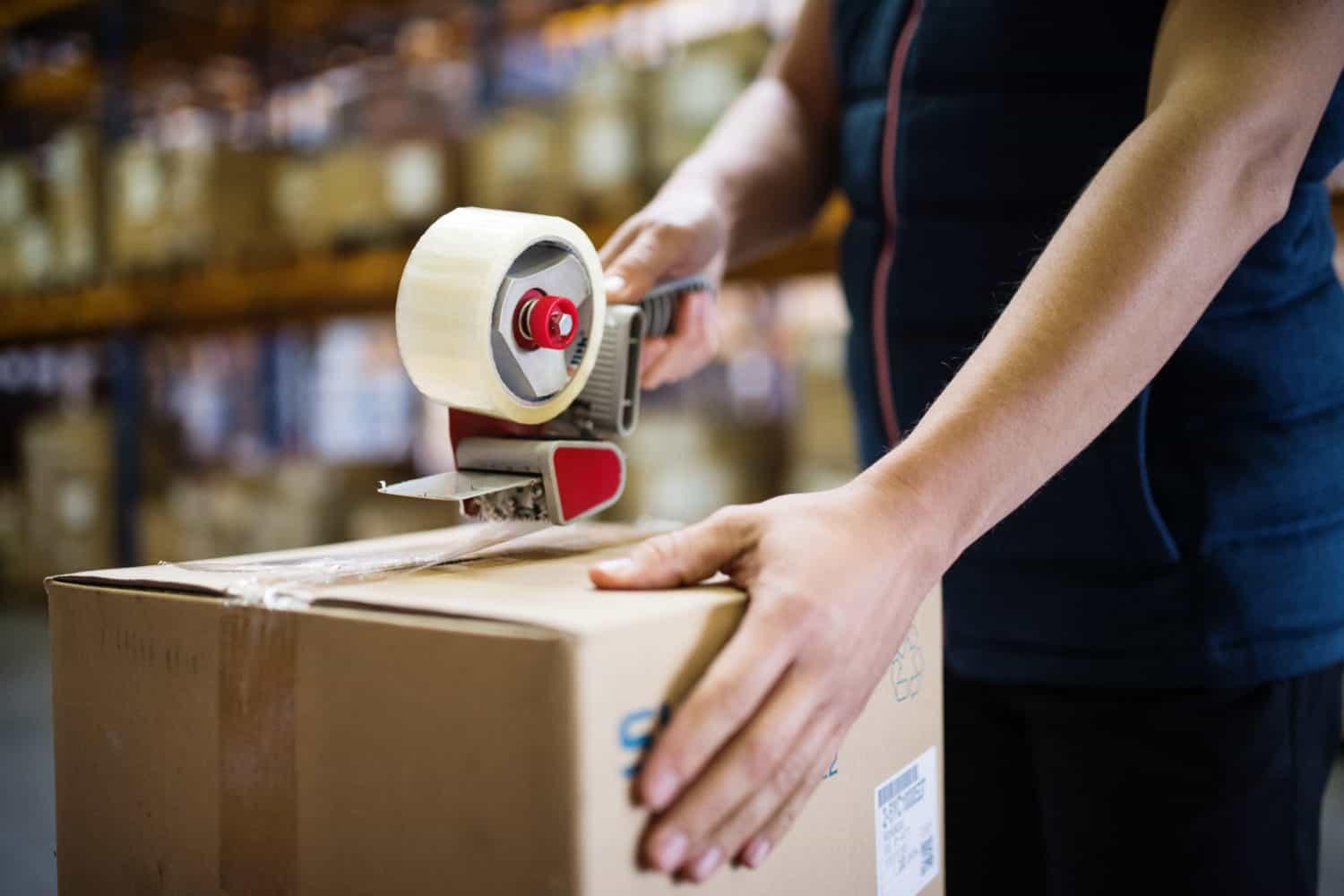
In-house packaging allows you to provide space and time for your packaging line. You're in control of operations and financing for the supply chain. You possess complete power over warehouses, utilities, technology, performance management, logistics, supplies, and everything else.

You're in charge of hiring, teaching, and supervising the operators of your machinery. You are always in charge of all packaging line system functionality in specific. You own a totally self-sufficient as a sole owner.

The Advantages and Disadvantages of In-House Packaging

Having your own supply chain and packaging plant has a number of advantages. When you use in-house packaging, for one thing, you have entire authority over your supply chain. You are free to manage these parts of your business as you see right. 

In-house packaging has a much higher starting expense. But, after your packing machinery is paid for, you may be capable to save some income. However, it might not be the situation. It depends on the materials and equipment you employ in your packing procedure.

Advantages of In-House Packaging

  • With one in-house management staff, you can handle several supply chains.

  • Controlling supply chain operations is a skill.

  • You can manage your own work force.

  • Shipping expenses are lower.


The Disadvantages of In-House Packaging

  • Costs are higher up front.

  • Handling workforce costs money.

  • Management dynamics involving time, investment, and resources.

What Is Contract Packaging, and How Does It Work?

The entire outsourcing of your supply chain and packaging line is referred to as contract packaging. It's outsourced to a contract packaging firm, which is a third-party supplier. Your whole supply chain is controlled by your third-party partner using contract packing. 

Packaging equipment, packaging materials, logistics, labor force, automation, utility, and all other aspects necessary to run your supply chain and packaging line are included in this category.

People who opt for contract packaging do so for a number of reasons. These considerations include cost and time savings, company simplicity, storage space reduction, and a refocus on key skills to manufacture better goods in a timely manner. 

The Advantages and Disadvantages of Contract Packaging

Contract packaging comes with its own set of advantages and disadvantages. Using a contract packaging business relieves you of all aspects of supply chain management. After that, you may concentrate on your company's key competencies.

Contract packaging can help you save money on packaging equipment and materials. It can also cut down on the costs of employing and maintaining a workforce.

You must give control of your supply chain in order to participate into a contract packaging arrangement. This is a non-starter for many firms.

Advantages of Contract Packaging

  • Costs are lower up front.

  • There's no need to hire staff.

  • There's no need to invest in packing equipment or materials.

  • This frees you up to concentrate on your company's key abilities.

  • There's no need to own or manage storage space or utilities.

The Disadvantages of Contract Packaging

  • You'll have to relinquish control of your supply chain.

  • There is no command over the workforce.

  • There is no power over the machinery's choices.

  • Materials selections are not under your control.

Which Is Better: Contract Packaging or In-House Packaging?

You'll need to consider a few factors when deciding between contract packaging and in-house packaging. This will assist you in determining which solution is best for your company's supply chain. These are some of the queries:

  • Do you desire complete control regarding your packaging and supply chain? - If your answer is yes, then in-house packaging is the way to go.

  • Do you wish to concentrate on your business's key competencies? - If you answered yes, contract packaging is the preferable option.

  • Do you wish to save money at the beginning? - If you answered yes, you should choose a contract packaging option.

  • Do you wish to be in charge of your own workforce? - If you answered yes, you should remain with in-house packaging.

  • Do you wish to save the expense of leasing or buying a warehouse? - If you answered yes, contract packing is the correct choice for you.

  • Can you afford all of the needed packaging machinery, equipment, and labor force? If the answer is no, contract packaging is the way to go.

You will have all you need depending on the info you've gathered so far. You may now determine if in-house or contract packaging is the best option for your company.

Wednesday, November 15, 2017

What Are Corrugated Boxes and How Do They Work?

 Corrugated Packaging's Various Applications and Types

What are corrugated boxes, and how do you use them? If you haven't heard about the world's greatest packing choice, you've come to the correct spot. Continue reading to discover more about corrugated boxes, as well as the purposes and varieties of corrugated packaging.

Corrugated vs. Cardboard

A cardboard box is constructed of strong paper-pulp or thick paper stock. This material is being used to manufacture a number of things, including tiny boxes, product packaging, and even structural support for less rigid objects like note books, inserts that protect button-up shirts from losing their form, and more.

Instead of a single sheet of cardboard, corrugated cartons are made up of many layers of material. An interior liner, an outer liner and a fluted medium between the 2 layers of corrugated, make the three layers. Corrugated is a durable and lightweight material, which is crucial for people who deliver a lot of products.


The Corrugated Box Manufacturing Process

To comprehend what corrugated boxes are, you must first comprehend how they are manufactured. Corrugated packaging is the most recycled packaging material on the globe, as it is made mostly from trees, which are a renewable resource. It's made from recycled corrugated boxes and trees.

Old corrugated containers (OCC) are dumped down, sorted, compressed, and baled for space-saving storage when corrugated is repurposed. These bales are then sent to a paper mill, in which the corrugated is broken down and placed into a repulper that is like to a huge mixer.

They're stirred in the repulper to make a slush pulp of fiber and water. The impurities are removed, and the leftover fiber mixture is placed onto a moving screen that drains the water, resulting in a continuous fiber mat. After that, the mat is pushed between rollers to extract any remaining water.

The wet, continuous fiber is looped through a drier, where it comes into contact with hot surface of dry cylinders at the top and bottom, eliminating any leftover water from the paper. After this step is completed, the paper is placed onto a huge reel spool, slit, and rewound into separate rolls, and the recycling process is deemed done. Those paper rolls are sent to sheet feeders or corrugators, where they are turned into corrugated sheets and then converted into environmentally friendly corrugated packaging.

The Fundamentals of Corrugated

Now that you understand the distinctions between corrugated and cardboard, let's look at the fundamentals of corrugated. When creating a corrugated box, there are several variables to consider. This is also why they can be customized so much.

Profiles of Flute

A, B, C, E, and F are the most popular flute sizes today, with A being the biggest. The thicknesses of the walls and the stacking power of your corrugated box are determined by the flute size. An “A” flute is roughly 5 mm thick and is a great choice for goods that need more cushioning or stacking power. The thickness of the board decreases as you progress through the B, C, E, and F flutes, concluding in a narrower board.

Types of Boards

Corrugated boxes may be made from four different types of boards. Single-wall and double-wall boards are the most prevalent. There is also some single-face board, which is created consisting of one sheet of corrugated medium attached to one sheet of liner.

This type of board is generally supplied in rolls and may be used to cover and support goods by wrapping around them. If one sheet of corrugated medium is bonded among two sheets of liner, the result is a single-wall board. The most popular form of board on the marketplace is single-wall, which may be used for anything from shipping boxes to shop displays.

If two sheets of corrugated material are bonded among three sheets of liner, it is known as double-wall. This board is frequently used for larger items or those that require a thicker delivery box.

Finally, triple-wall construction involves gluing three layers of corrugated medium among four sheets of liner. This is the most durable of all the board types, and it is frequently used for industrial products.

Board Grade

Mullen or Edge Crush Test (ECT) corrugated board is a type of corrugated board. The uses of these two types of board are vastly different. The ECT test determines how much stack power or force a box can endure without crushing. If you're planning to stack cartons on top of each other, whether on a pallet or on a storage shelf, ECT board is the best option.

Why Do You Need Custom Packaging for Your Company?


The Advantages of Using Custom Packaging

1. Customer’s satisfaction is the key.

If you want to please your consumers, the best way to do it is to provide them a nice unboxing moment, and what is the best way to accomplish so than with custom packaging? This is extremely crucial for e-commerce businesses since they lack the “shelf presence” that traditional stores have. E-commerce businesses must make an impact on the customer in some way, and your product packaging may help you accomplish it alone.

2. Product’s Protection/Safety

As essential as delivering a pleasant experience for your consumers is, ensuring that your goods gets at your customer's doorstep in the very same condition as it departed your warehouse is as critical. It really doesn't matter how good your product is or what issues it addresses if you can't ensure that it will arrive in one piece to your consumers. Your goods will make it securely from point A to point B with the help of a custom packaging box.

3. Cost-Efficiency

Corrugated cardboard is used to make custom packaging boxes, and they are also very cost-effective. Corrugated is made from trees and recycled corrugated boxes in a sustainable manner. It also boasts a 90 percent industry recovery rate over the previous eight years, and a 96 percent recovery rate in 2018, making it not only cost-effective to create but also to recycle.

4. Improved Brand Recognition

You can quickly enhance brand recognition and stand out from competitors by developing custom packing boxes that are readily reproducible, cost-effective, and loyal to your business. Your brand recognition objectives and much more may be achieved with a creative, custom design that is ideal for businesses.

5. Retail Custom Package

Catching a consumer's eye is one of the most difficult problems that companies have when it comes to retail packaging, and it is also the most crucial component. Businesses usually have only a few seconds to create an impression on customers. Your item will not be picked up and inspected more, let alone purchased, if it does not stand out among its competitors. Custom packaging cartons, on the other hand, may change everything.

First and foremost, it is specially designed for your goods and no one else's, ensuring that the appearance and feel are preserved. Second, it ensures that your product is adequately secured for retail placement. You no longer have to be concerned about your goods being presented properly. Finally, it improves consumer perceptions of your product's worth.

If you've a custom packaging box, a consumer is more likely to think your product is superior than a competing product.

6. Custom Packaging for E-Commerce

Retail packaging is one aspect, but how can e-commerce firms benefit from custom packaging? Because online shopping has grown to be a multibillion-dollar business, firms have become more adaptable and have to change their packing methods. Nowadays, it's critical to ensure that every consumer is happy with their purchase. Custom packing boxes are the most effective method to do this.

By utilizing custom packing boxes for your company, you will be able to make a positive first impact on your clients straight away. According to researches, the design of product packaging has a high connection with a customer's perception of the product's worth. When you use custom packing boxes, you can be sure that your consumer will be delighted as soon as they see your brand.

7. Capabilities for Design

Companies design custom packing boxes for businesses that are suited to their unique requirements. Consider ways to improve your product. We can ensure that your product packaging stands out from the competitors, thanks to our design talents.

Specializing in custom product packaging, will work to ensure that your product performs optimally throughout the management, storage, and shipment. It will be better equipped to help you through the present problems you're encountering if you help develop a solution around your unique needs.

It will collaborate with you to build a solution that delivers both support and stiffness across the distribution channel, reliability and simplicity of use in retail locations, and eye-catching designs and advice to attract and please customers. It will assist businesses in improving the effectiveness and efficiency of their packaging operations.

Establish the personality of your company. If your business is all about delicacy, use delicate colors and designs in your packaging to represent that image. Use beautiful colors and strong graphics to make a lasting impression if your business image is rough.

Thursday, June 23, 2016

Crowd Controlled Packaging for Managing High Returns

Returns surges happen with companies. holiday season, where people get items that either don’t fit right or not what they wanted, oftentimes get returned.

Another example is fast fashion, where trends go out of style fast, that people only keep it until it becomes unpopular to wear. 

Then there are those try-before-you-buy models, popularized by Amazon Fashion, where you can try the item before committing to a purchase, and can be turned if the sizing is incorrect. 

Having the right packaging that can handle high returns is important. If not factored, it can lead to you wasting a lot of money, which isn’t fun.

Here, we will go over the most popular crowd-controlled packaging for managing returns of all kinds. 


Packaging that Streamlines and Improves Reverse Logistics 

With reverse logistics, returns are the main focus, because in some cases, it might mean a sale, or a rental.

You need to make sure that reverse logistics are maintained and factored in. here is something to consider when putting together reverse logistics packaging.

Easy reseal envelopes are a good starting point with these reseal envelopes, you’re able to seal and then reseal again, making it easy to ship it back if the item isn’t what you wanted. 

Consider double-sided labels, which are labels with two sides, necessary for returns, especially if you know that the returns are common.

Modular inserts, which can be used to help return the packaging, is another good thing. Overall, all of these methods prepare for the inevitable returns that come with certain sectors. 


Reducing Processing Labor for Returns 

Some packaging does get bogged down during the returns process because it is not properly optimized. If you want returns and replacements to be processed faster, it’s important to design the packaging.

Having a barcode compartment for the return is important. That way, when the return comes in, it can be scanned and then shipped out right away. making it in a place easy to scan is very important.

Another thing to consider as well is the automation of sorting. Having this as a possibility that will help with improving your sorting will also drastically expedite returns, since you will have it sorted for each type of item. 

Supplies for One-Touch Restocking 

You also should consider packaging that’s made for restocking. 

Return-friendly folding systems, such as automated folders, are a common example. Another example of this, is also to have the packaging be re-folded to the original design, stocked once again for a future customer and down cleanly. 

What’s the Metrics for Return-Centric Packaging 

The metrics for this are based on how many returns come in, the speed of the returns, and customer satisfaction with the replacements. Having the packaging barcode talk about the return, and also any customer problems, will help to ensure that the replacement fits the needs of the customer.

You also want to make sure that they’re speedy too. waiting too long for it to come is just going to make customers look towards somewhere else or do something else.


The final thing is also ensuring that the packaging is easily returned back.   If there is speed to the returns, then great, your packaging is good for return-centric experiences. But, if it takes too much time and customers complain about this, then you might want to consider some different ways for return-centric packaging to stand out, and thereby improve what’s there.

Again, with this system, being mindful of your returns is important, so doing this in a way will inevitably benefit all that buy from you.


Thursday, February 18, 2016

Custom Printed tissue

Custom printed tissue may not seem like the first choice when trying to impress clients but custom printed tissue is a great way to promote the shipping and manufacturing of a company for a low cost that’s good for you. How does it make it stand out more. 

Why tissue 

Tissue is really good because it offers the best first impression. Why? When someone gets a package from you, they open this, and pretty much, they’ll be seeing that tissue, so you can advertise what they’re getting, and associate the brand with the product. You can also make the logo large on this too for more fun. 


This also is pretty cool because you can actually advertise the past shipping too with this. Paper tissue is really good for reusability and if you want to use this, it can be good for you.  Some may throw away the tissue paper, but then, someone else may see it, or if they reuse it, they’ll see it again. Some also may use this as shipping material too, so then it just circulates to everything else, and it goes all around the world. It’s a small investment, but worth it as well. 

How to Pair it 

If you want to really offer custom branded boxes, you can actually pair this with other materials to make it worth your shipping. If you’re already doing the external custom branding, sometimes the internal packaging is worth it. 


If you pair the tissue paper with different kinds of custom packaging, it offers a really branded experience that’ll help with every single stage of this. It also is really good for events too. For those who are having industry events, making adjustments to your packaging and products offers an appeal and impression, and increase the awareness of the brand, and offers a more favorable use for this. 


It’s pretty cool how you can pack up your gift bags for industry events with this, either with the logo or a message and whatnot. This does make it stick out, since some people will know for sure what your company is, and know who you are through this alone, and this does make a good impression. 

If you’re running an industry event and want to really make your stuff stand out, this is one of the best and easiest ways for you to stand out, and that’s what’s cool. 


Friday, January 9, 2015

Fungi Based Packaging

 Packaging comes in all sorts of new and innovative sustainable means. One unique one that’s come down the pipeline in recent years, is fungi. Yes, mushroom packaging. 

Mycelium is a new type of fungi packaging, and it’s been a popular sort of item for shipping supplies. Considered to be a biodegradable alternative, we’ll go over here what fungi-based packaging entails, and why it’s become the new, hit thing for a lot of packaging providers. 

What Mycelium Packaging 

Mycelium packaging is exactly what you think it is. it’s made from mycelium, or mushrooms. Oftentimes, it’s also mixed with hemp too, in order to create eco-friendly packaging that protects your shipping. 

Why use Mushroom Packaging 

Well mushrooms are natural. They’re a form of biodegradable packaging that naturally breaks down, so it won’t harm the planet. You’re leaving less of a carbon footprint.


It’s safe for the oceans, since you’re able to just plop it into some water, and then break it down. It also doesn’t contain plastic either, so it’s considered a sustainable initiative. There are no chemicals either, as it’s all natural.

Another interesting fact is that it’s flame-resistant, so for flammable objects, it is a great option to utilize. It also is water-resistant, which is great if you have something that doesn’t need to get wet. It works better than regular cardboard boxes. 

There are some fun ways to use it. Since the mushroom packaging is naturally grown, you just have to grow it, and then process it.   with mushroom packaging, it offers unique, customized designs that can really improve your packaging experience. 

How to dispose of it? 

You can dispose of it either through using a compost pile, or just by tossing. Since it’s a natural design, it also is easy to remove. There’s no complex disposal methods, but you just compost or toss it.   You also don’t need to send it to recycling plants. 

How’s it Made? 

Mushroom packaging is made through the mycelium, which is usually grown around corn stalks or hurds of hemp. The mycelium is essentially a “blue” that binds the wastes to create a shape within its mold, and then it’s dried in order to prevent further growth. It is then placed into a customized mold, where it’s grown until the shape that’s desired is formed, and then dried in order to stop the growing cycle.

The process of drying and curing is something that’s used to help keep it in the right shape, and then, once it stops growing, it can then package out the products that you have, in order to create sustainable growth. 


It’s a great alternative to the plastic packaging problems because they’re made from agricultural waste that’s renewable, and totally biodegradable, so it does work. 

Mushroom packaging does have a few limitations, especially in the process and durability. It may not work for heavy objects, but for smaller items that you want to create a more eco friendly experience for, this is the way to go.

We will probably see more and new designs with mushroom packaging come down the pipeline. After all, it is the future of packaging. For many people, mushroom packaging offers a unique, fun experience that will help you with building sustainability of all kinds. The sky’s the limit on what you can do with your packaging.


Mushrooms are something that may not seem like a product type to be used. But with so many unique, exciting options to choose from, you don’t want to miss any of these, for they are right there ready for you to experience and enjoy the packaging process too.


Friday, July 22, 2011

Packaging to Be Carried by Hand, Not Shipped

Yes, some packaging is now being arranged to be more human-centric.   While you may see this in brick and mortar stores, there are also some other companies as well that focus on those that are carried.

In-store purchases brought to customers is one example. Even those customers carry out are common.   They don’t need a box or extra dunnage. They have the item, and just need to carry it to their car, or carry it home. 

Boutique and retail from these also need to be carried by hand. Unless they have an online luxury storefront, there’s a strong chance it will not be carried in a box or shipped.

Finally, popup shops. These small stores that show up for a day or so have items that customers are able to build and carry with them. Having it carried by humans is a great place to start, and it can truly work.


Making Sure that the Products are Simple to Carry and Light 

Simplicity is the name of the game here.

Even if it’s just some clothes, you want to make sure that you have the item properly balanced, with weight and shape considerations in place.

Ergonomics is another part of this. Having handles that are ergonomic is a big part of this, and it can, in turn, make things a whole lot easier for carrying. The goal of this is to prevent strain on the hands. If you’re situated in a mall and they’re carrying it all day, you don’t want a bag to leave an indentation in the fingers or wrist, so try to prevent strain whenever you can.

You can also have the weight distribution set up so the product feels lighter. Putting it in a way where it’s easy to carry, and the weight is properly and evenly distributed helps a lot.


Multi-Use Bags on the Rise 

One big thing that brands are using are multi-use carry boxes and bags that are held by hand.

For a lot of ecofriendly and sustainable businesses, having this in place is common. Sometimes, they want a bag that allows them to use it again and again, or a box they can carry in, put the product inside, and then bring it again.

Making this from sustainable materials that will last, such as corrugated or kraft fibers, is a good place to start. 

If you’re a luxury brand, this also plays a role, because many luxury providers will use this type of packaging to help with improving their packaging.

Again, less is more sometimes with the packaging, so be mindful.

Designed for Crowd Navigation 

You also want the item to be held and kept in one piece when moving through crowds and busy spaces, like malls or city structures.


Having the item in a package that’s small and efficient, but doesn’t strain the wrists, is a good start. 

The grip is another good one. Those elastic bags that people use are terrible for grip, so they won’t work as well, especially in spaces such as this.   you want to be mindful of this, and make sure you’re not making this a problem.

Finally, make it mobile and easy to carry through such busy spaces. It will help get from one place to the next.

This type of packaging is commonly seen in cosmetic stores, especially in malls. Fashion brands also use this type of packaging, especially boutique brands. And finally, local food markets use this. By having a bag that’s easy to handle, customers can buy from you, and also continue with their day without problems either.