Showing posts with label cardboard. Show all posts

Wednesday, September 12, 2018

Why Is Corrugated Packaging The Right Choice?

 We'll explain what corrugated is, how it's manufactured, and why it's the ideal packaging solution for you and your goods even if you're not aware of it. Corrugated and cardboard are sometimes mistaken by those who are not in the packaging sector. Although they appear to fulfill the same functions and have similar appearances, the two materials are structurally and functionally completely different.

A cardboard box is constructed of strong paper pulp or thick paper material. A cereal box is an excellent example of a cardboard box, but corrugated cartons are harder and have many layers of material instead of a one layer. An interior liner, an outer liner, and a fluted medium between them make up the three layers.
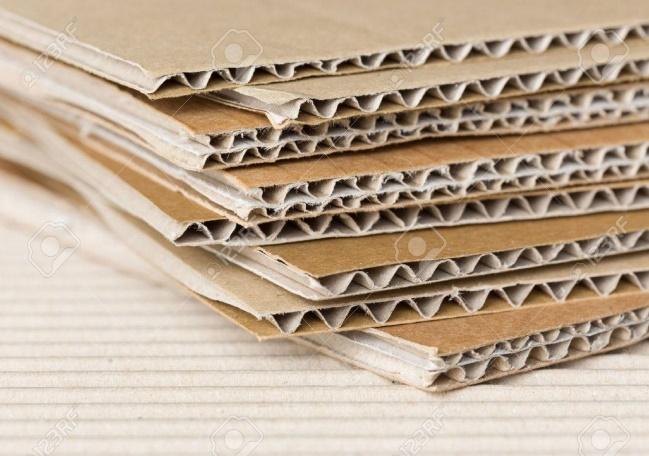
Corrugated as a Packaging Choice Has a Lot of Advantages

1. Reusability, Recycling, and Durability 

Corrugated is the most recycled packaging material on the globe, as it is produced primarily of trees (a renewable). It is made from trees and old recycled corrugated cartons in a sustainable manner, with an industry recovery rate of about 90% over the previous 8 years and 96 percent in 2018. That's why the usual corrugated box contains 50% recyclable materials.

Plastic, another common packaging material, is just around 15% recoverable, contrary to corrugate’s general recovery rate with over 78 percent.

Improved efficiency in mill power systems, improved recovery for recycling, and use of low-impact fossil fuels were all verified in the most recent corrugated industry life cycle assessment (LCA) issued in 2017. Corrugated packaging recovery also decreased greenhouse gas emissions by 35% from 2006 to 2014 by retaining corrugated out of landfills, according to the LCA.

Corrugated material recycling has an immediate and substantial influence on our planet's wellbeing. It reduces the amount of solid trash that is disposed of. Without needing to utilize all-new raw materials, recovered fiber is used to produce fresh corrugated packaging. As old corrugated boxes are a significant resource for both paper mills and fresh corrugated producers, they may also be a source of income.

Corrugated may be recycled in order to be a renewable material. Because of its resilience and versatility, it may be reused several times before being reused to create fresh packaging. Consumer products are frequently shipped in corrugated boxes. Your goods will most likely arrive in a corrugated box if you purchase anything online. Thus, the next time you get an order, grab the carton, put it aside, and save it for later use.


2. Safety of the Goods

The safety of your products should be the most essential aspect of your packaging. If your consumer gets your goods and it is defective or destroyed, then nothing works. A custom corrugated container can assure that your goods arrive securely at its destination. Other packaging materials, like foam, can be used into corrugated packaging to guarantee the safety of your goods.

3. Modification

There aren't too many packaging alternatives that let you personalize your package to fit your product perfectly. You may do so using corrugated materials. You may modify your packaging to match the appearance and feel of your goods. One-size-fits-all packaging is no longer an option. Use corrugated packaging to effectively display your goods to your target consumer base, whether it's for shop or e-commerce.

4.  Skills in Printing and Graphic Design

Corrugated packaging allows companies to include artwork, and what better option to grab the attention of the customers than with customized designs? Consumers are drawn to your goods and away from your competitors because of graphics. They also provide you the opportunity to raise brand recognition. Litho labeling, digital print, direct print, and integrated graphics are four popular graphic alternatives to consider.


5. Commercial Packaging and E-commerce

Do you require e-commerce packaging or retail packaging? If that's the case, corrugated is the solution for you.

For commercial enterprises, catching a customer's sight is a difficult task, but it's also critical. Your product packaging must stand out in only a few minutes to create an impression on a customer. You can achieve precisely that with a custom corrugated box since it may be specifically made for your goods, it protects your product for retail display, and it increases consumer perceptions of its worth.

Custom corrugated packaging for e-commerce allows us to make a good first decision with your consumers immediately. You can assure that your consumer is satisfied as soon as they see your branding with a custom corrugated packaging. According to research, the appearance of product packaging has a high connection with a customer's perception of the product's worth.

Wednesday, November 15, 2017

What Are Corrugated Boxes and How Do They Work?

 Corrugated Packaging's Various Applications and Types

What are corrugated boxes, and how do you use them? If you haven't heard about the world's greatest packing choice, you've come to the correct spot. Continue reading to discover more about corrugated boxes, as well as the purposes and varieties of corrugated packaging.

Corrugated vs. Cardboard

A cardboard box is constructed of strong paper-pulp or thick paper stock. This material is being used to manufacture a number of things, including tiny boxes, product packaging, and even structural support for less rigid objects like note books, inserts that protect button-up shirts from losing their form, and more.

Instead of a single sheet of cardboard, corrugated cartons are made up of many layers of material. An interior liner, an outer liner and a fluted medium between the 2 layers of corrugated, make the three layers. Corrugated is a durable and lightweight material, which is crucial for people who deliver a lot of products.


The Corrugated Box Manufacturing Process

To comprehend what corrugated boxes are, you must first comprehend how they are manufactured. Corrugated packaging is the most recycled packaging material on the globe, as it is made mostly from trees, which are a renewable resource. It's made from recycled corrugated boxes and trees.

Old corrugated containers (OCC) are dumped down, sorted, compressed, and baled for space-saving storage when corrugated is repurposed. These bales are then sent to a paper mill, in which the corrugated is broken down and placed into a repulper that is like to a huge mixer.

They're stirred in the repulper to make a slush pulp of fiber and water. The impurities are removed, and the leftover fiber mixture is placed onto a moving screen that drains the water, resulting in a continuous fiber mat. After that, the mat is pushed between rollers to extract any remaining water.

The wet, continuous fiber is looped through a drier, where it comes into contact with hot surface of dry cylinders at the top and bottom, eliminating any leftover water from the paper. After this step is completed, the paper is placed onto a huge reel spool, slit, and rewound into separate rolls, and the recycling process is deemed done. Those paper rolls are sent to sheet feeders or corrugators, where they are turned into corrugated sheets and then converted into environmentally friendly corrugated packaging.

The Fundamentals of Corrugated

Now that you understand the distinctions between corrugated and cardboard, let's look at the fundamentals of corrugated. When creating a corrugated box, there are several variables to consider. This is also why they can be customized so much.

Profiles of Flute

A, B, C, E, and F are the most popular flute sizes today, with A being the biggest. The thicknesses of the walls and the stacking power of your corrugated box are determined by the flute size. An “A” flute is roughly 5 mm thick and is a great choice for goods that need more cushioning or stacking power. The thickness of the board decreases as you progress through the B, C, E, and F flutes, concluding in a narrower board.

Types of Boards

Corrugated boxes may be made from four different types of boards. Single-wall and double-wall boards are the most prevalent. There is also some single-face board, which is created consisting of one sheet of corrugated medium attached to one sheet of liner.

This type of board is generally supplied in rolls and may be used to cover and support goods by wrapping around them. If one sheet of corrugated medium is bonded among two sheets of liner, the result is a single-wall board. The most popular form of board on the marketplace is single-wall, which may be used for anything from shipping boxes to shop displays.

If two sheets of corrugated material are bonded among three sheets of liner, it is known as double-wall. This board is frequently used for larger items or those that require a thicker delivery box.

Finally, triple-wall construction involves gluing three layers of corrugated medium among four sheets of liner. This is the most durable of all the board types, and it is frequently used for industrial products.

Board Grade

Mullen or Edge Crush Test (ECT) corrugated board is a type of corrugated board. The uses of these two types of board are vastly different. The ECT test determines how much stack power or force a box can endure without crushing. If you're planning to stack cartons on top of each other, whether on a pallet or on a storage shelf, ECT board is the best option.

Friday, July 22, 2011

Packaging to Be Carried by Hand, Not Shipped

Yes, some packaging is now being arranged to be more human-centric.   While you may see this in brick and mortar stores, there are also some other companies as well that focus on those that are carried.

In-store purchases brought to customers is one example. Even those customers carry out are common.   They don’t need a box or extra dunnage. They have the item, and just need to carry it to their car, or carry it home. 

Boutique and retail from these also need to be carried by hand. Unless they have an online luxury storefront, there’s a strong chance it will not be carried in a box or shipped.

Finally, popup shops. These small stores that show up for a day or so have items that customers are able to build and carry with them. Having it carried by humans is a great place to start, and it can truly work.


Making Sure that the Products are Simple to Carry and Light 

Simplicity is the name of the game here.

Even if it’s just some clothes, you want to make sure that you have the item properly balanced, with weight and shape considerations in place.

Ergonomics is another part of this. Having handles that are ergonomic is a big part of this, and it can, in turn, make things a whole lot easier for carrying. The goal of this is to prevent strain on the hands. If you’re situated in a mall and they’re carrying it all day, you don’t want a bag to leave an indentation in the fingers or wrist, so try to prevent strain whenever you can.

You can also have the weight distribution set up so the product feels lighter. Putting it in a way where it’s easy to carry, and the weight is properly and evenly distributed helps a lot.


Multi-Use Bags on the Rise 

One big thing that brands are using are multi-use carry boxes and bags that are held by hand.

For a lot of ecofriendly and sustainable businesses, having this in place is common. Sometimes, they want a bag that allows them to use it again and again, or a box they can carry in, put the product inside, and then bring it again.

Making this from sustainable materials that will last, such as corrugated or kraft fibers, is a good place to start. 

If you’re a luxury brand, this also plays a role, because many luxury providers will use this type of packaging to help with improving their packaging.

Again, less is more sometimes with the packaging, so be mindful.

Designed for Crowd Navigation 

You also want the item to be held and kept in one piece when moving through crowds and busy spaces, like malls or city structures.


Having the item in a package that’s small and efficient, but doesn’t strain the wrists, is a good start. 

The grip is another good one. Those elastic bags that people use are terrible for grip, so they won’t work as well, especially in spaces such as this.   you want to be mindful of this, and make sure you’re not making this a problem.

Finally, make it mobile and easy to carry through such busy spaces. It will help get from one place to the next.

This type of packaging is commonly seen in cosmetic stores, especially in malls. Fashion brands also use this type of packaging, especially boutique brands. And finally, local food markets use this. By having a bag that’s easy to handle, customers can buy from you, and also continue with their day without problems either.